
Accounting software helps with invoicing, expenses, bank reconciliation, and financial reports. For many Singapore SMEs, it may work well for years.
As the business grows, employees may use more spreadsheets and applications for sales, stock, and purchasing. Information becomes harder to find, and simple tasks take longer.
This is where enterprise resource planning, or ERP, may help.
The simple difference: Accounting software focuses on finance. ERP brings finance and everyday operations together, helping teams share information without repeatedly entering the same details.
ERP vs Accounting Software: A Simple Comparison
When a customer orders, sales may record it, the warehouse may update a spreadsheet, and finance may re-enter the details for invoicing.
With ERP, the same order can update stock, fulfilment, and billing through one connected process.
Area | Accounting software | ERP software |
Main purpose | Manage accounts and financial reports | Connect accounts with daily operations |
Who may use it | Owners, accountants and finance teams | Finance, sales, purchasing, warehouse and management |
Inventory | Basic stock features or a separate application | Stock can be connected to sales and purchasing |
Information | Mainly financial information | Financial and operational information in one place |
Getting started | Usually quicker and simpler | Can be introduced gradually based on business needs |
Accounting software may be exactly what a business needs. ERP becomes worth considering when separate systems make work unnecessarily difficult.
7 Signs ERP Could Make Work Easier
1. Employees enter the same information several times
Sales enters an order; the warehouse copies it and finance re-enters it for billing. ERP lets teams use the same information, saving time, and reducing mistakes.
2. Important information is spread across spreadsheets
Employees may spend too much time finding the latest spreadsheet or checking its figures. ERP provides a shared place for updated information.
3. Simple questions take too long to answer
If checking stock, order progress or outstanding purchases requires several people to combine information, ERP could provide a clearer view.
4. Stock records do not always match
Separate sales, warehouse, and accounting records may show different quantities. ERP can connect orders, deliveries, transfers, and returns.
5. Approvals are difficult to track
Approvals may be scattered across messages and emails. ERP can send requests to the right person and keep them with the transaction.
6. The business has more than one location
ERP can reduce paperwork and make stock, sales, and other information easier to view across locations.
7. Administrative work is taking time away from customers
ERP can reduce time spent copying information, checking figures and following up, allowing employees to focus on customers.
Company size does not determine ERP suitability. A small distributor with many products may benefit sooner than a larger company with simple operations.
When Accounting Software may still be Enough
Accounting software may remain suitable when operations are straightforward, information is easy to find, and existing applications work well together.
Improving the current setup or connecting one additional application may be enough. A good advisor should recommend ERP only when it provides clear value.
Could ERP Make Everyday Work Easier?
Consider whether your team would benefit from:
- Entering customer, order and product information only once
- Finding accurate sales, stock and purchasing information more quickly
- Spending less time checking spreadsheets and correcting duplicated records
- Handling routine approvals and follow-ups more smoothly
- Using a consistent process across teams or locations
- Starting with one area that needs the most help
You do not need to change everything at once. Start with one challenge, such as stock accuracy, order processing or reporting.
Choosing the Right System for your SME
ERP should make work easier and information clearer. It should fit your company rather than create unnecessary complexity.
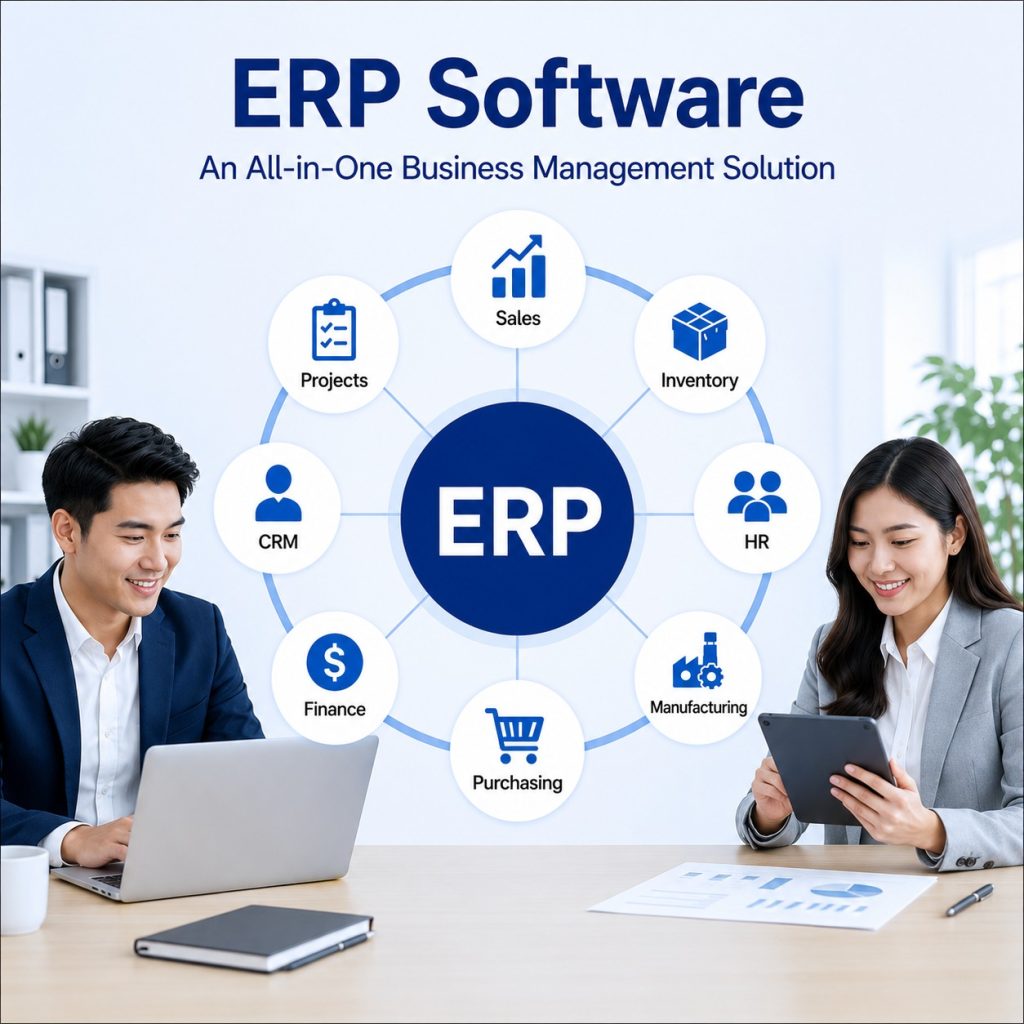
361 Degree Consultancy learns how your business works before recommending accounting software, ERP or connected applications. Accentuate ERP can connect accounting, sales, purchasing, inventory and HR.
Ready to find out if ERP is the right fit for your business? Contact us today at 6515 7906 or email enquiry@361dc.com for a consultation. We’ll help you assess your current processes and recommend solutions that support your business needs.
Frequently Asked Questions on ERP
No. Many businesses use accounting software successfully. Consider ERP when connecting information and daily work would save meaningful time or effort.
No. What matters is how the company operates, not how many employees it has.
Not necessarily. Existing applications may be connected to ERP or replaced gradually, depending on what already works well.
Any new system requires adjustment, but training and a gradual introduction make change easier. Employees should help shape how they support daily tasks.
Ask: “Which daily task takes more time than it should?” An advisor can then explore suitable options without requiring an immediate commitment.