
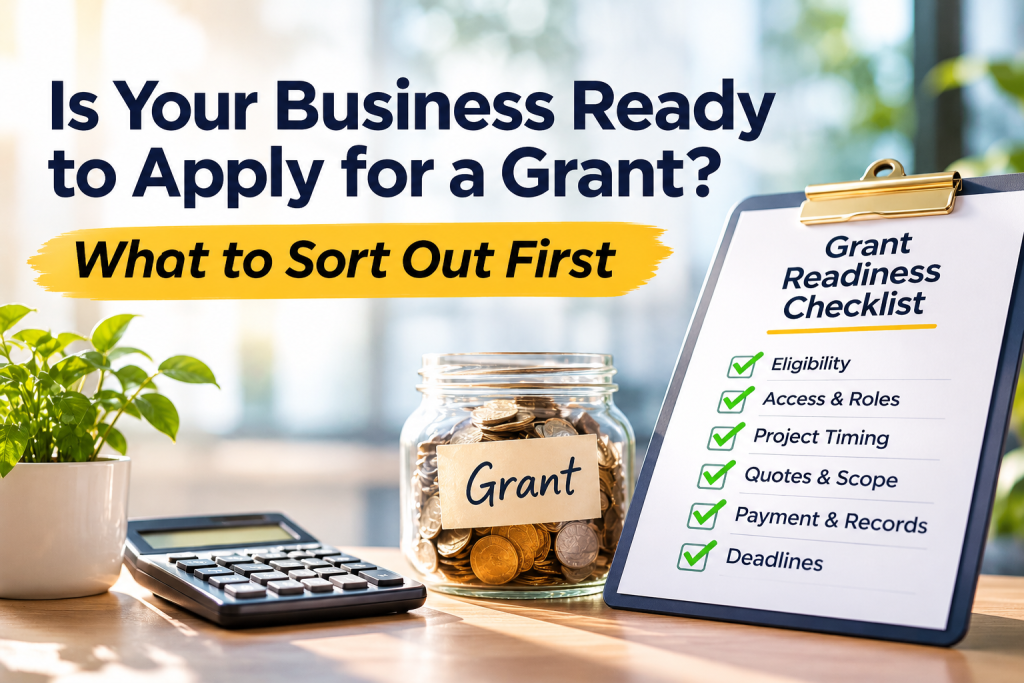
Most grant problems don’t start at the application. They start earlier. The wrong person submits it. A deposit gets paid too soon. The invoices can’t be found when it’s time to claim.
The good news is that these are easy to avoid if you know what to look for. This guide covers what to sort out before you apply for a business grant in Singapore, such as the grants listed on the Business Grants Portal. Every grant has its own rules, so use this as a starting point and check the details for the one you want.
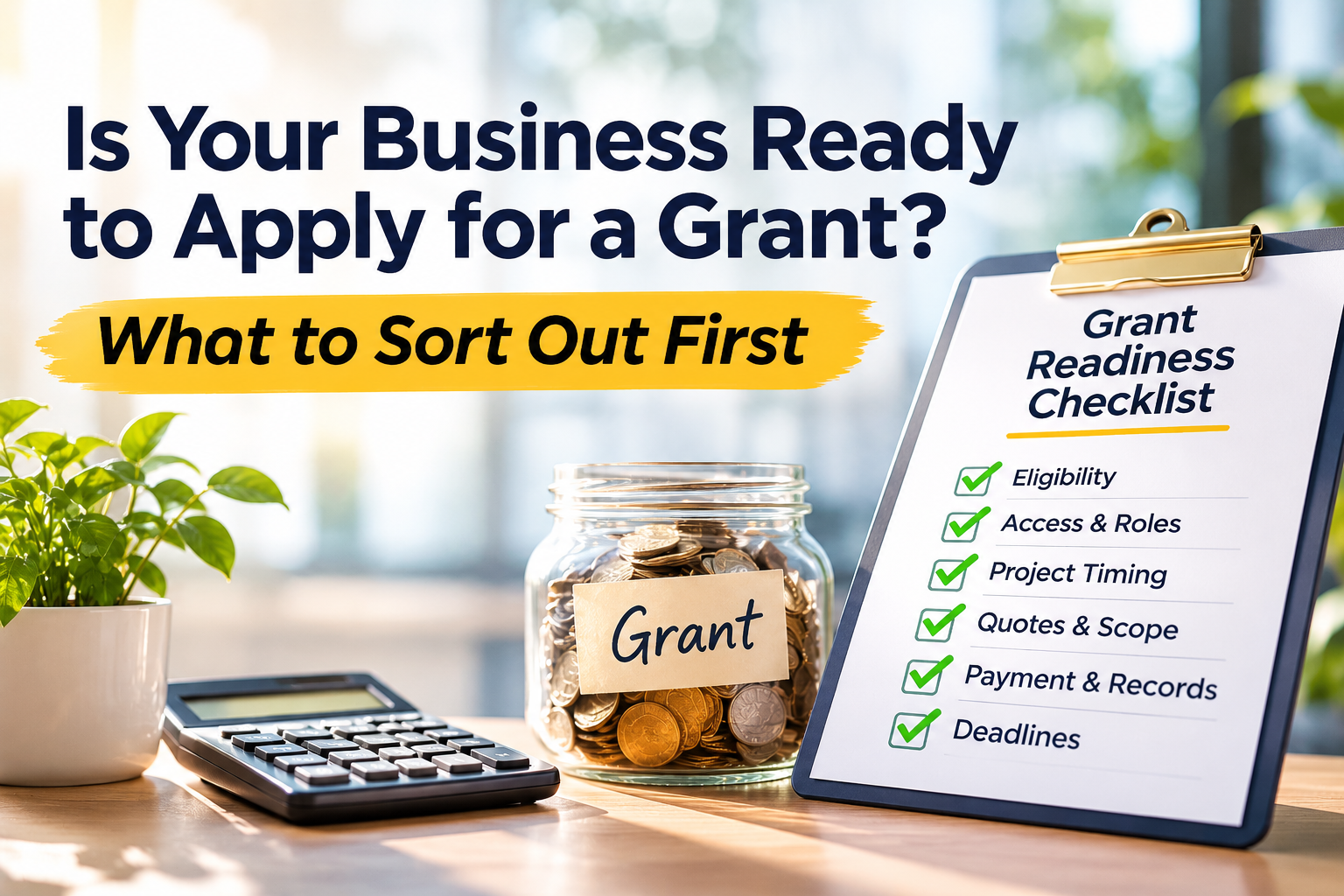
Is your business eligible?
Start here, because it decides everything else. Common requirements include being registered in Singapore, having a minimum level of 30% local ownership, and meeting the SME definition. In Singapore, that means a group annual turnover of up to S$100 million, or no more than 200 workers.
Some grants also have extra conditions for specific activities, so confirm the eligibility for the specific grant that you have in mind. Do check the eligibility again before submitting for claims. If your situation changes after approval, such as your ownership, your claim may not be supported.
Who will submit the application?
Many government grants are applied for through the Business Grants Portal (BGP), which needs a Corppass login. Your company’s Corppass Administrator gives the right staff roles, such as BGP Preparer and BGP Acceptor.
Often your own staff must do the submitting. Vendors, consultants and other third parties may not be allowed to submit or claim on your behalf. They could, however, guide you through the process. Check the grant’s rules, and make sure the right people have access early, so it doesn’t hold you up later.
Don't start the project too soon
This is the most common trap. Many grants don’t support projects that have already started. If you begin work or pay a deposit to a vendor before you apply, your application may be treated as retrospective and rejected.
Check what the grant says about timing. Some allow you to buy after you submit but before you get approval. Even then, submitting doesn’t guarantee approval, and you carry the risk if it’s rejected.
Get your project and quotes clear
Each grant asks for different documents. Look out for what to prepare for the grant that you are interested in, and read it thoroughly before you talk to any vendor. A few things to look out for:
- Some grants need you to choose from pre-approved vendors. Others let you pick your own.
- Your vendor usually must not be connected to your company, its directors or its shareholders. You may need to declare any relationship.
- The scope and cost should be clear and written down in the quotation.
- For software, check whether the grant has caps, set packages or minimum features. For example, under EDGE, an integrated ERP solution needs at least three functions, such as finance, HR or inventory, and up to S$30,000 of the yearly cap can go to digital solutions and pre-scoped equipment.
Be ready to pay first
Many grants pay on a reimbursement basis. You pay the vendor, finish the project, then claim. Cash advances are usually not allowed.
So you need the cash on hand, and the payment should come from your company. You can usually claim only after the work is done and fully paid. Some grants allow just one final claim, so extra bills from the vendor afterwards may not be covered.
Keep these in one place: the approved quotation, invoices, proof of payment, and proof that the project was delivered. For software, that can include things like a licence number or user ID.
Watch your deadlines
After approval, your project usually has a set period to finish and a due date for the claim. Extensions may be possible, but they’re often limited. If you miss the claim due date, you may lose the grant. For example, EDGE allows only one extension. Ask early, not on the last day.
Where good systems help
Look back at the points above. Almost all of them come down to records. Who paid what, and when. Which invoice goes with which payment. Who signed off the work.
When your accounts, invoices and staff records sit in one system, putting a claim together is much quicker. When they’re spread across spreadsheets, email threads and chat messages, it gets messy fast. Software won’t win you a grant. But tidy records make applying and claiming a lot less stressful.
A quick self-check
Can you say yes to all of these?
- Does my business meet the grant’s eligibility rules?
- Do the right staff have portal access through Corppass?
- Have I avoided starting work or paying a deposit before applying?
- Do I have clear quotes from vendors who aren’t connected to us?
- Can we pay the full cost first, and keep proof of everything?
If any answer is no, fix it before you apply.
Not sure if you're ready?
If you’re planning a grant application, or you’re not sure which grant fits your project, talk to us first. We’ll look at where you stand, point out what to fix before you apply, and help you plan the project and the systems behind it. Your own team will still need to submit on the portal, and we’ll guide you through each step.
Contact us at 6515 7906 or enquiry@361dc.com.
Frequently Asked Questions
Usually not. Many Singapore business grants are paid on a reimbursement basis. You pay first, complete the project, then claim. For example, EDGE works this way, and you can only claim once the project is complete and fully paid. Check the terms of your grant.
Often not. Many grants require your own authorised staff to submit applications and claims. Vendors and consultants can advise but may not be allowed to submit. For example, under EDGE, only your own authorised staff can submit applications and claims. Confirm in the grant's guidelines.
Usually not. Many grants treat this as a retrospective application and won't support it. For example, under EDGE, work started or a deposit paid before you submit means the application won't be supported. Check before you pay or sign anything.
It depends on the grant and the activity. For example, under the EDGE Grant, funding is up to 50% for SMEs. Other grants may pay more or less, and some have yearly caps. Check the support level and any caps on the grant's page before you plan your budget.